The Effect of Standard Heat and Filtration Processing
Procedures on Antimicrobial Activity and Hydrogen Peroxide Levels in Honey
There is increasing interest in the antimicrobial properties
of honey. In most honey types, antimicrobial activity is due to the generation
of hydrogen peroxide (H(2)O(2)), but this can vary greatly among samples.
Honey is a complex product and other components may modulate
activity, which can be further affected by commercial processing procedures.
In this study we examined honey derived from three native
Australian floral sources that had previously been associated with
H(2)O(2)-dependent activity. Antibacterial activity was seen in four red
stringybark samples only, and ranged from 12 to 21.1% phenol equivalence
against Staphylococcus aureus. Antifungal activity ranged from MIC values of
19-38.3% (w/v) against Candida albicans, and all samples were significantly
more active than an osmotically equivalent sugar solution.
All honey samples were provided unprocessed and following
commercial processing. Processing was usually detrimental to antimicrobial
activity, but occasionally the reverse was seen and activity increased.
H(2)O(2) levels varied from 0 to 1017 μM, and although samples with no H(2)O(2)
had little or no antimicrobial activity, some samples had relatively high
H(2)O(2) levels yet no antimicrobial activity.
In samples where H(2)O(2) was detected, the correlation with
antibacterial activity was greater in the processed than in the unprocessed
samples, suggesting other factors present in the honey influence this activity
and are sensitive to heat treatment. Antifungal activity did not correlate with
the level of H(2)O(2) in honey samples, and overall it appeared that H(2)O(2)
alone was not sufficient to inhibit C. albicans.
We conclude that floral source and H(2)O(2) levels are not
reliable predictors of the antimicrobial activity of honey, which currently can
only be assessed by standardized antimicrobial testing. Heat processing should
be reduced where possible, and honey destined for medicinal use should be
retested post-processing to ensure that activity levels have not changed.
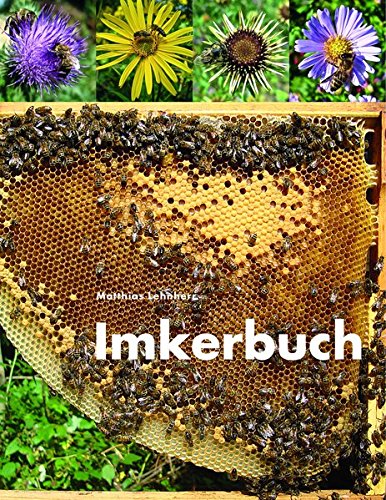 Lehnherr, Mathias (8. Aufl. 2017) [1992]: Imkerbuch